
Pay Bill Here - Fast and Convenient
BVIEC’S MONTHLY FUEL DATA – MAY 2026
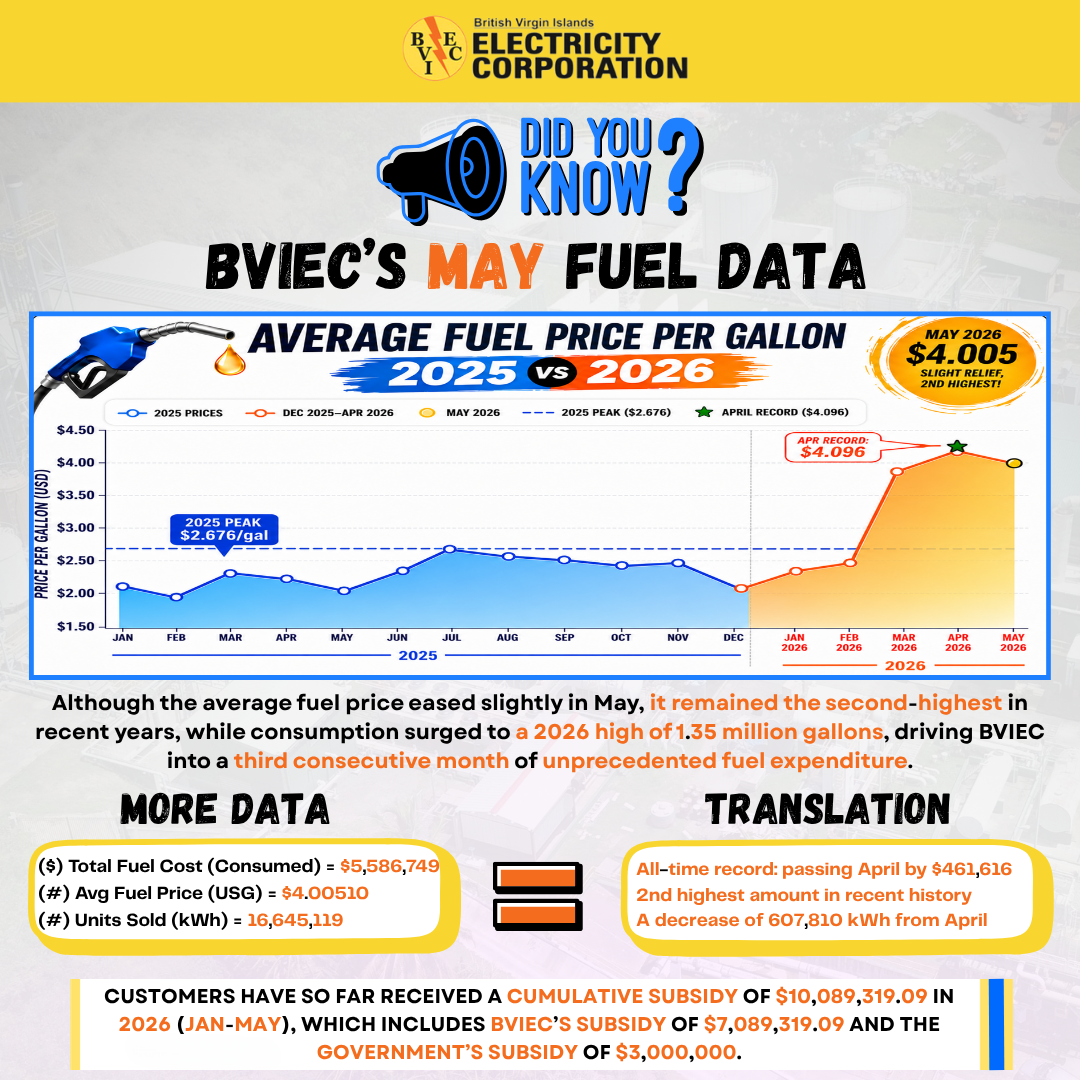
Tortola, British Virgin Islands, July 3, 2026 — May 2026 marked another challenging month for electricity generation in the Virgin Islands, as global fuel market pressures continued to outweigh the gains made in April.
Although the average fuel price eased slightly from April’s record high, it remained the second-highest price BVIEC has paid in recent years. At the same time, fuel consumption climbed to 1.35 million gallons, the highest of any month in 2026, driving total fuel costs to a new record of $5.59 million. This is the third consecutive month that BVIEC has recorded unprecedented fuel expenditure.
Unlike April, the modest reduction in fuel prices was offset by higher fuel usage and lower electricity sales, resulting in an increase in the cost to produce electricity and a higher fuel surcharge. It serves as another reminder that even small shifts in global fuel markets can have a significant impact on the cost of powering the Territory.
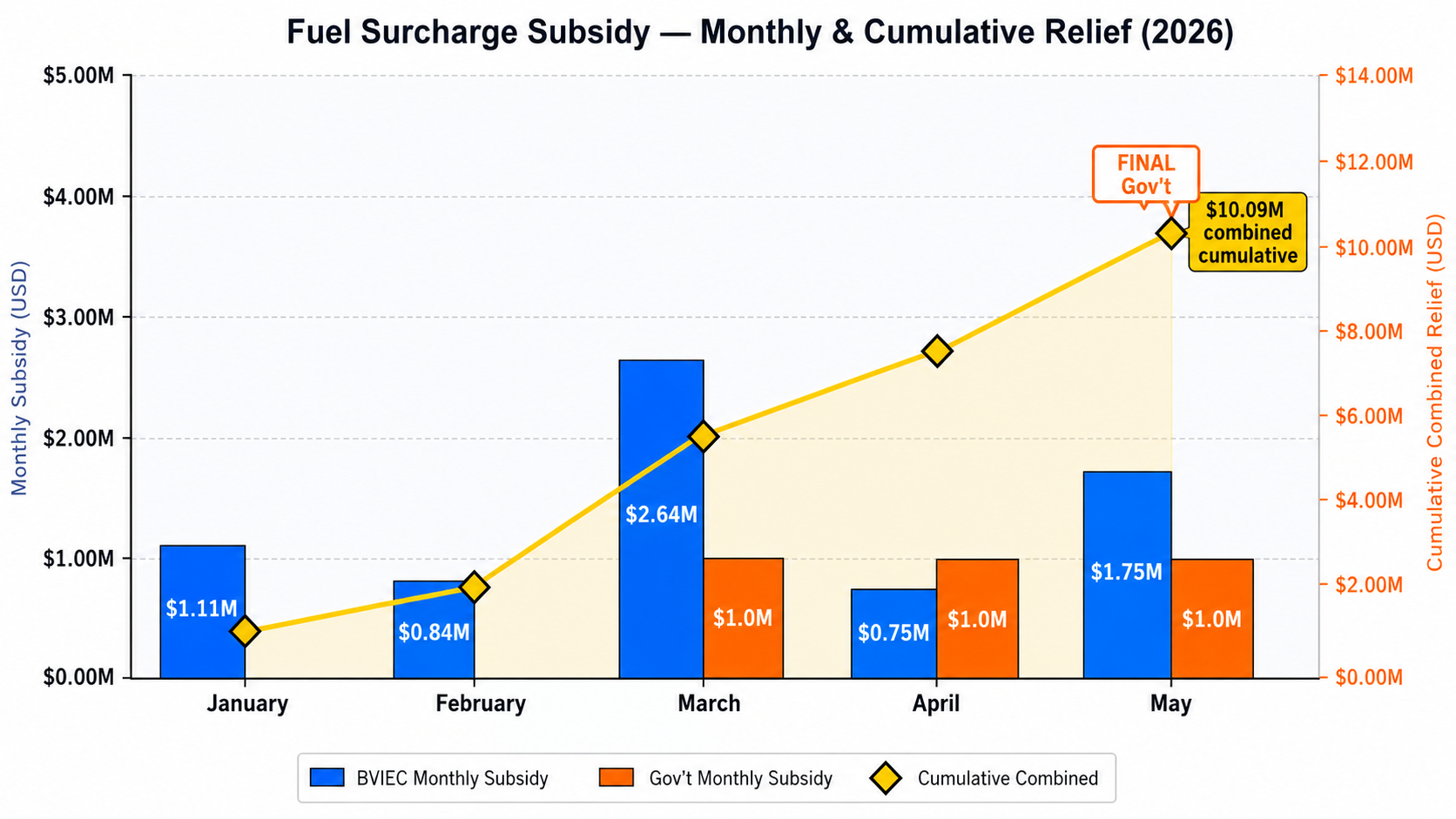
May also marks the conclusion of the Government of the Virgin Islands’ three-month emergency fuel subsidy programme, which provided $3 million in direct relief to electricity customers. Combined with BVIEC’s own mandated fuel subsidy, more than $10 million has been absorbed to help shield customers from the full impact of this unprecedented global fuel crisis.
The figures that follow provide a transparent look at what drove May’s costs, how customers were protected, and what these trends mean for the months ahead.
AT A GLANCE — MAY 2026 (7 Categories)
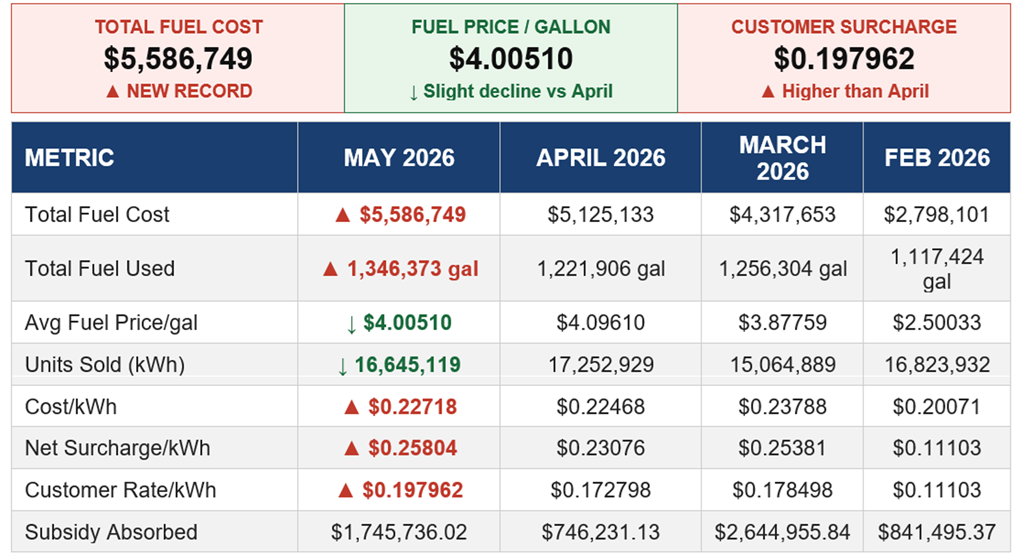
1) Total Fuel Cost: $5,586,749
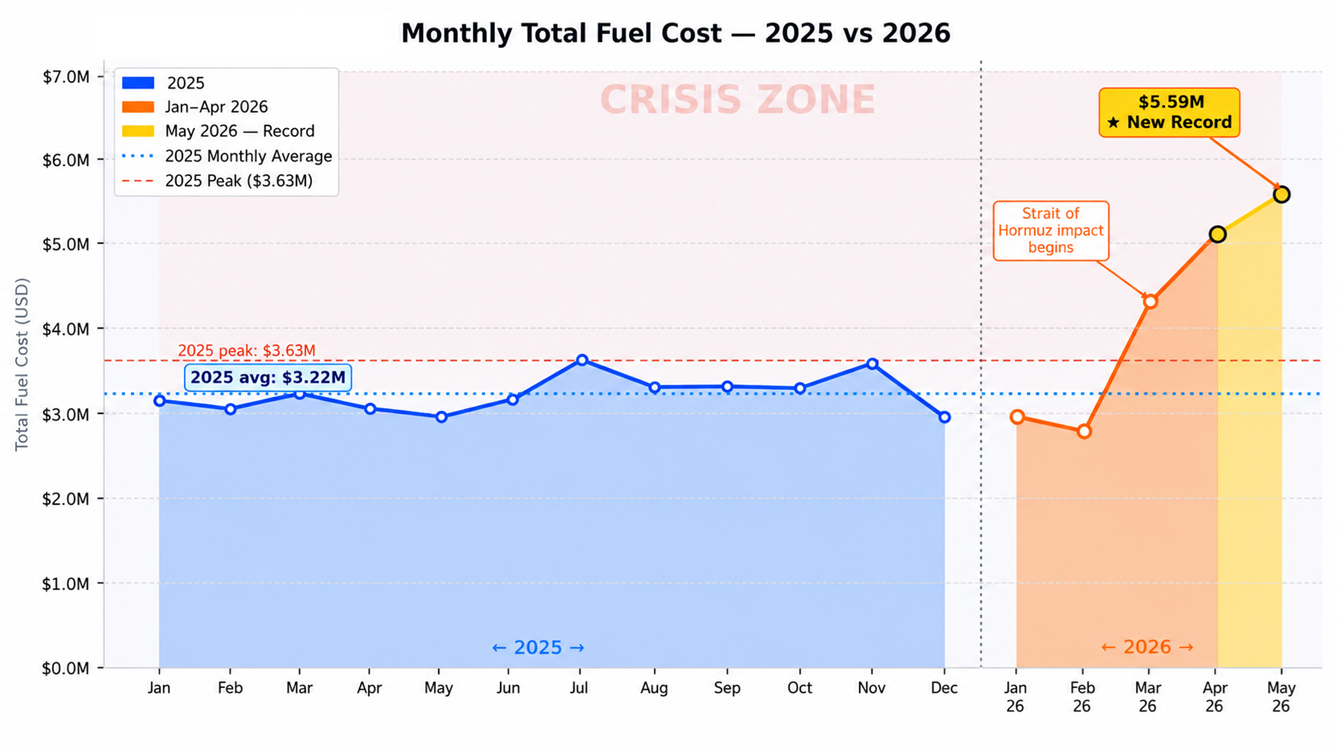
(April: $5,125,133 | March: $4,317,653 | 2025 Peak July: $3,630,979)
What it Means:
May set a new fuel cost record of $5.59 million, exceeding April by $461,616. Although the average fuel price dipped slightly, the Territory consumed a record 1.35 million gallons, the highest monthly usage of 2026, making volume, rather than price, the biggest driver of May’s costs.
Why it Matters:
Three consecutive months of record fuel costs have placed unprecedented pressure on BVIEC’s finances. With electricity rates unchanged since 1978, the Corporation continues to absorb the gap between the cost of generating electricity and what customers pay, reinforcing the need for long-term, sustainable solutions.
Relatable Example:
BVIEC spent approximately $180,218 on fuel every single day in May, over $7,509 every hour. That is $9,418 more per day than April, and over $84,000 more per day than January. To put the five-month picture in perspective: BVIEC has spent over $20.8 million on fuel in the first five months of 2026 alone, averaging $4.16 million per month. In 2025, the monthly average was approximately $3.2 million.
2) Total Fuel Used: 1,346,373 gallons
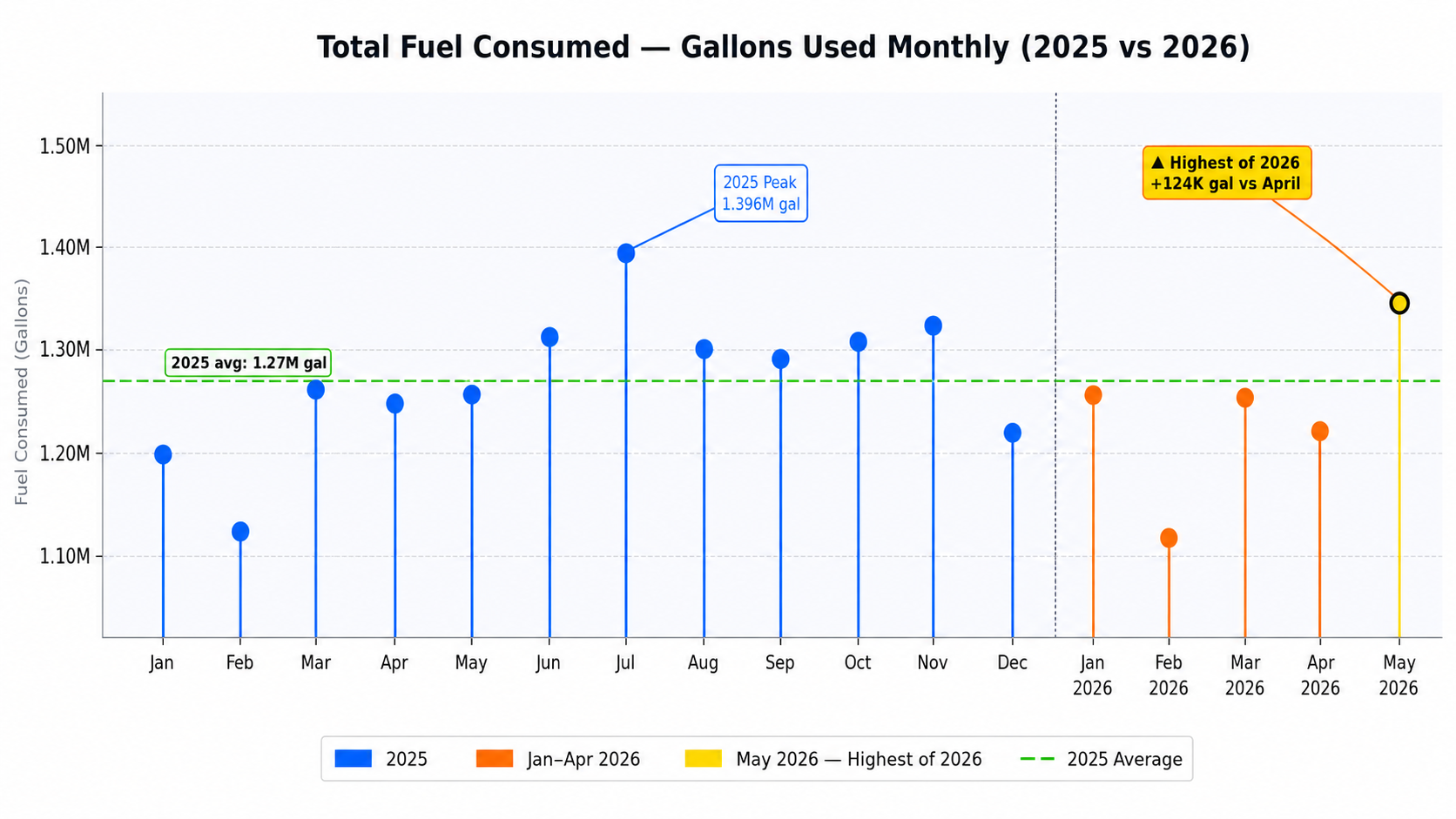
(April: 1,221,906 gal | March: 1,256,304 gal | January: 1,258,282 gal | 2025 Peak July: 1,396,368 gal)
What it Means:
May recorded 1.346 million gallons of fuel consumed, the highest of any month in 2026 and over 124,000 gallons more than April. With fuel prices still near record highs, this increase in consumption became the primary driver of May’s record fuel cost, reflecting the Territory’s growing seasonal electricity demand.
Why it Matters:
May’s higher fuel consumption reflects increased seasonal demand, not improved efficiency. It reinforces BVIEC’s continued dependence on imported fuel, where higher demand and global price movements directly increase electricity generation costs.
Relatable Example:
In July 2025, the busiest month of last year, BVIEC burned 1,396,368 gallons of fuel. May 2026 consumed over 96% of that peak volume, in what is typically a transitional month heading into the summer. With peak season still ahead, the consumption trajectory is one of BVIEC’s most closely watched indicators heading into June and beyond.
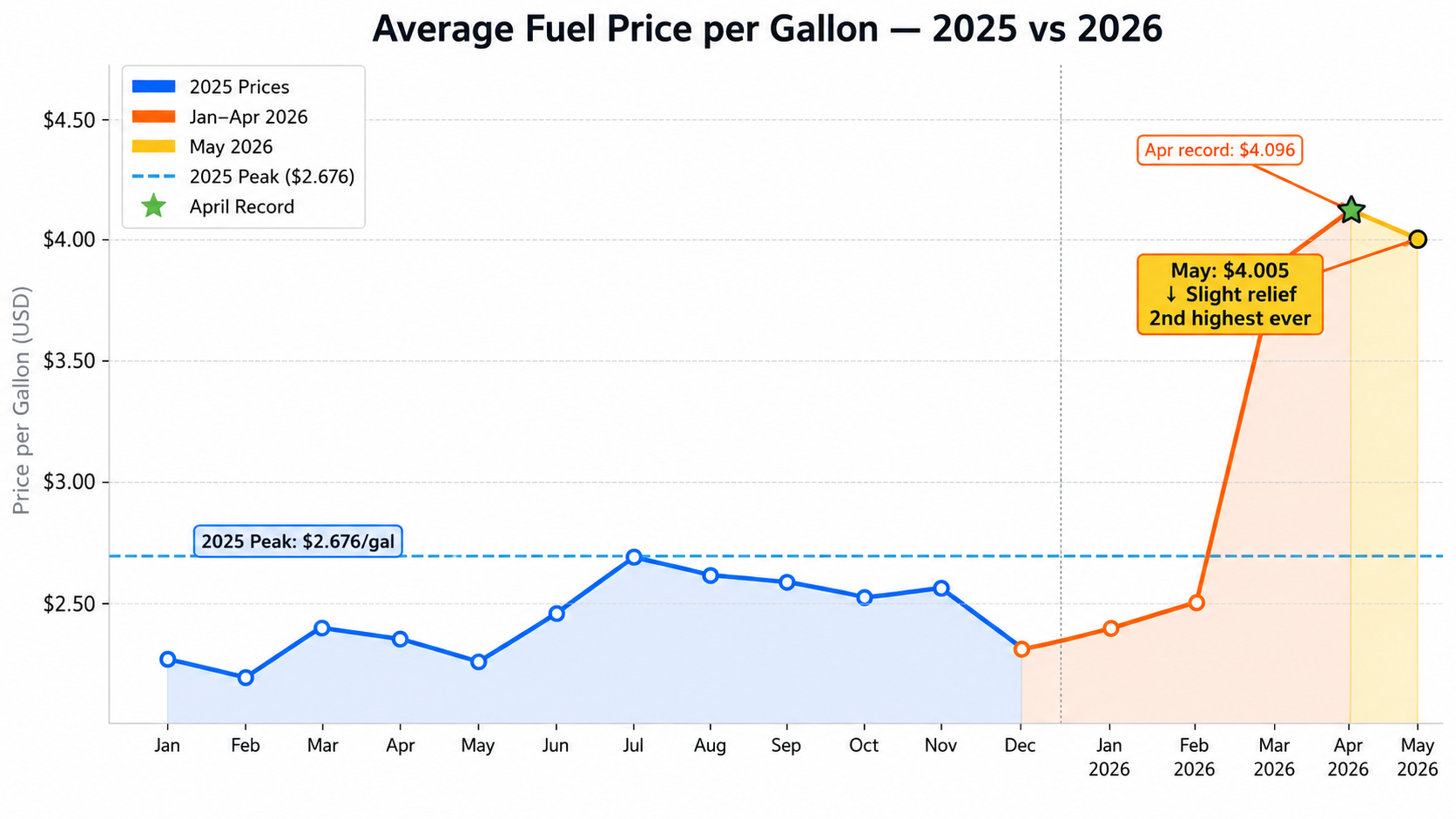
3) Average Fuel Price: $4.00510 per gallon
(April: $4.09610 | March: $3.87759 | 2025 Highest: $2.67625)
What it Means:
Although the average fuel price eased slightly to $4.005 per gallon in May, it remained the second-highest in BVIEC’s recent history, 50% higher than 2025’s peak and 66% above January 2026. While prices showed modest improvement, the impact of global market disruptions continues to be felt.
Why it Matters:
May is a clear illustration that price and volume are both variables in the fuel cost equation and that a small improvement in one can be more than undone by an increase in the other. Sustained and meaningful price relief will require a resolution to the geopolitical situation that caused this crisis.
Relatable Example:
Think filling up your car is expensive? In May alone, BVIEC purchased enough fuel to fill nearly 90,000 average car tanks, spending a record $5.59 million to keep the Territory powered.
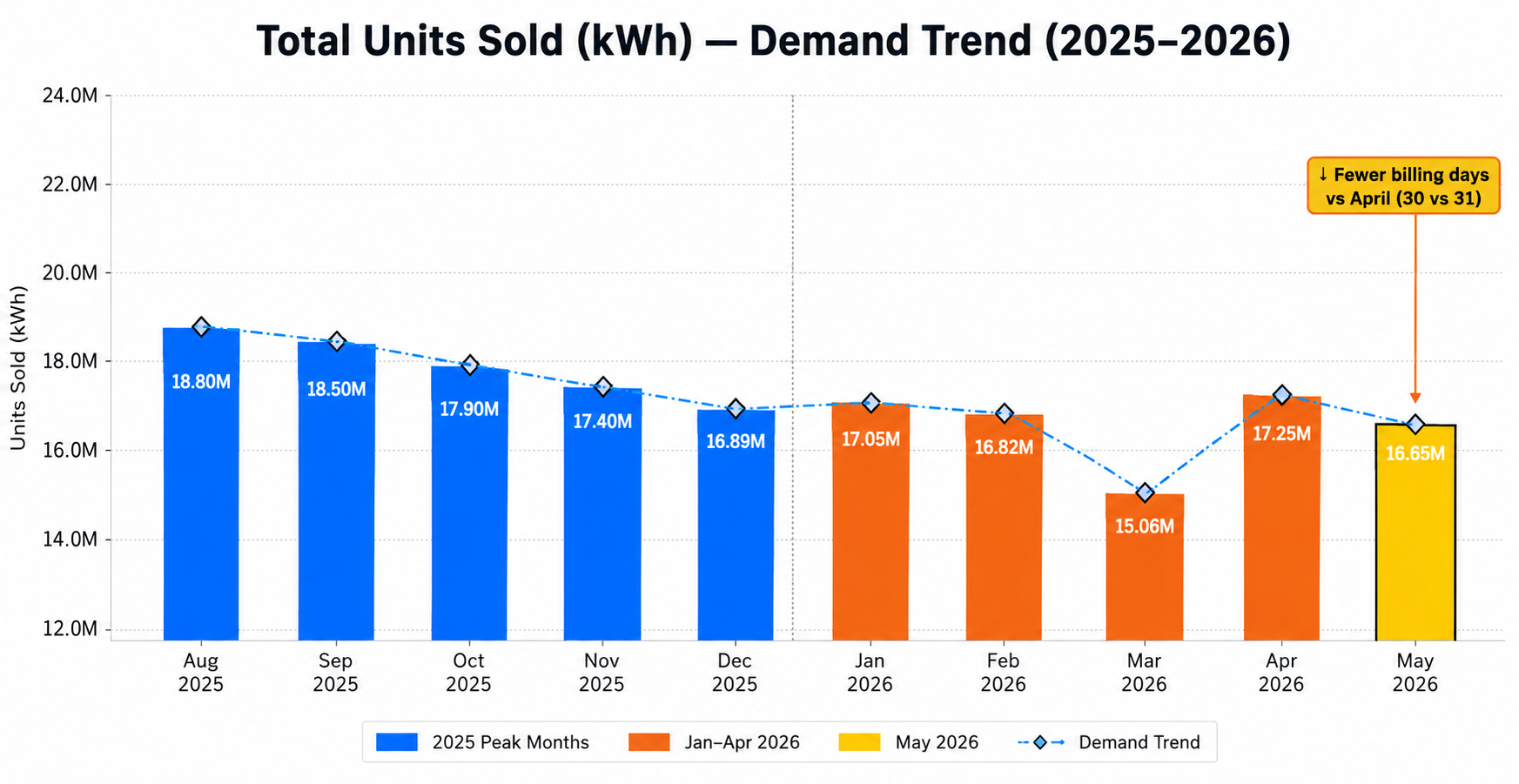
4) Total Units Sold: 16,645,119 kWh
(April: 17,252,929 kWh | March: 15,064,889 kWh | February: 16,823,932 kWh | January: 17,049,087 kWh)
What it Means:
May recorded 16.645 million kWh sold, down 607,810 kWh from April, largely due to April’s shorter 30-day billing cycle. Despite fewer units sold, fuel consumption increased significantly. As a result, more fuel was needed to produce less electricity, contributing to higher production costs and the fuel surcharge.
Why it Matters:
The slight decline in units sold from April is largely a reflection of the billing cycle, one fewer day captured in May’s data compared to April. It does not signal a drop in the Territory’s energy needs, nor does it offer any meaningful relief on costs.
Relatable Example:
If a standard window AC uses about 240 kWh per month, May’s 16.6 million kWh could have powered nearly 69,000 units running 8 hours a day, every day.
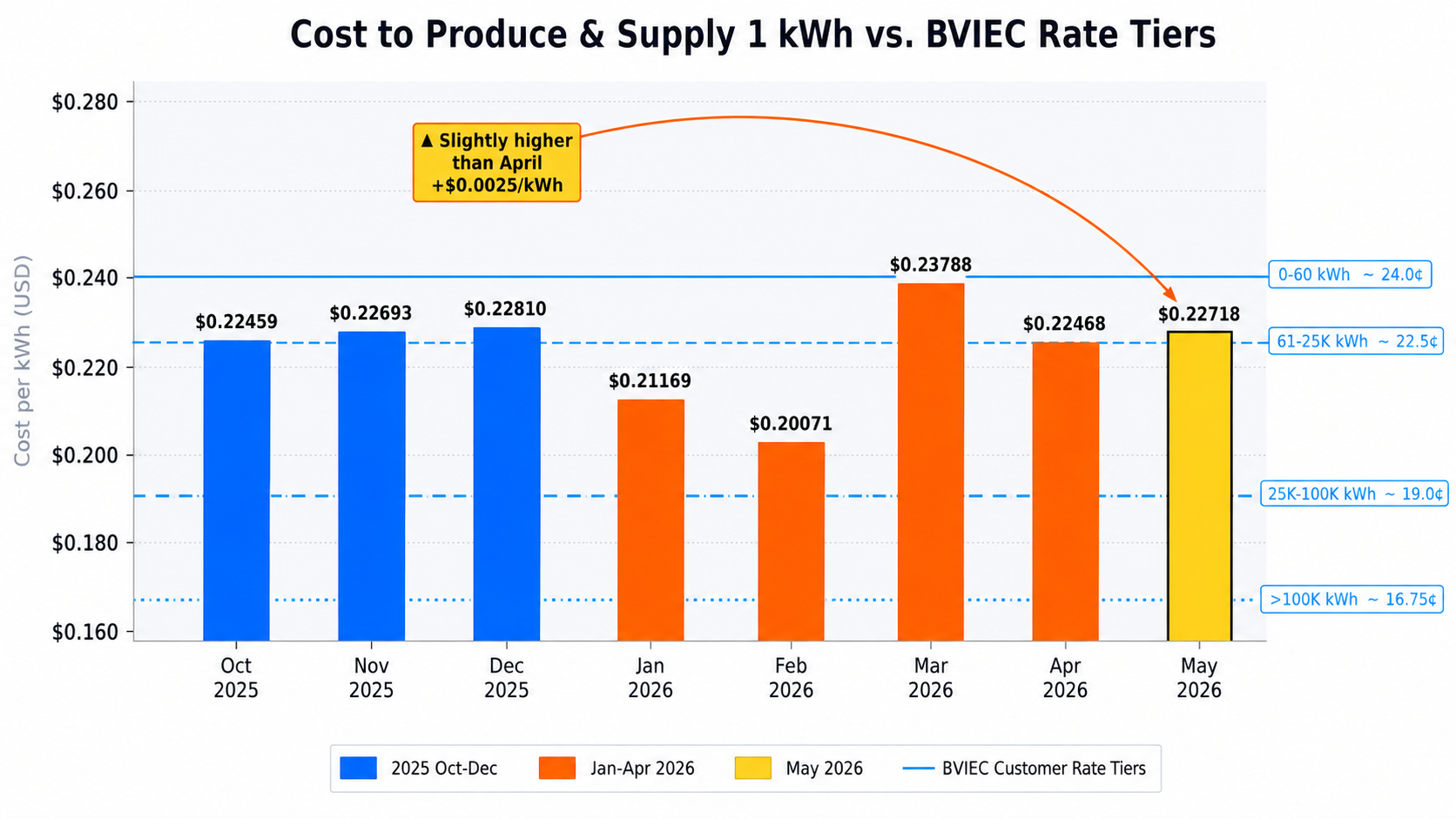
5) Cost to Produce & Supply 1 kWh: $0.22718
(April: $0.22468 | March: $0.23788 | February: $0.20071 | January: $0.21169)
What it Means:
In May, it cost BVIEC $0.22718 to produce each kilowatt-hour of electricity. This figure highlights the gap between the true cost of generating electricity and the rates customers pay.
Why it Matters:
The cost to produce each kilowatt-hour drives the fuel surcharge. In May, BVIEC spent 22.7 cents per kWh, while some customers paid just 16.75 cents under rates unchanged since 1978, continuing the gap between production costs and revenue.
Relatable Example:
For every 1,000 kWh generated in May, BVIEC spent $227.18. A large-volume customer on the lowest rate tier contributed just $167.50 toward that cost, leaving BVIEC absorbing $59.68 per 1,000 kWh, before subsidies are even considered.
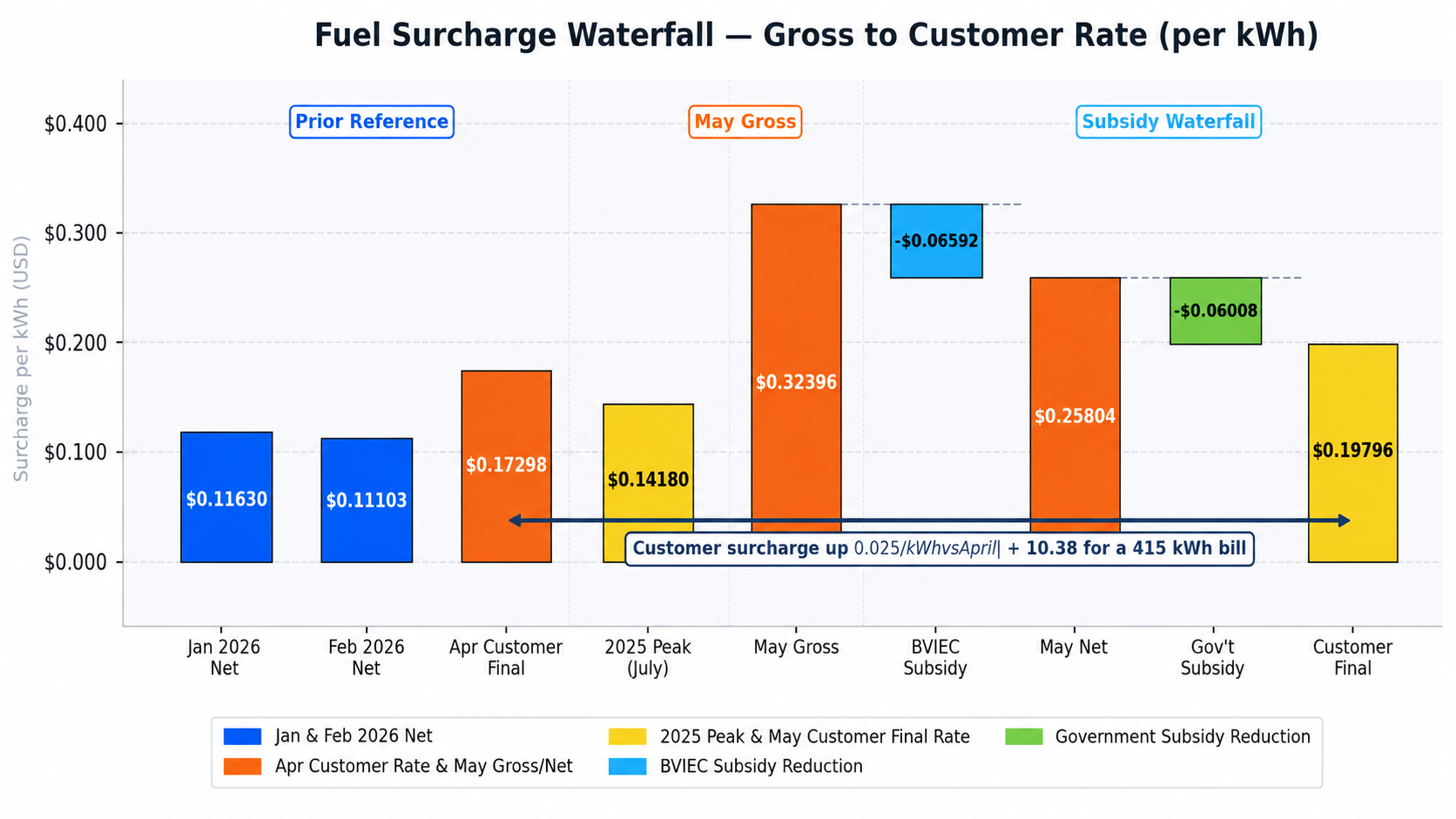
6) Fuel Surcharge: $0.25804 per kWh
(Gross before BVIEC subsidy: $0.32396 | After BVIEC: $0.25804 | After Gov’t: $0.197962 | April customer rate: $0.172798)
What it Means:
The surcharge started at $0.32396, was reduced by BVIEC to $0.25804, and was then reduced again by the Government to $0.197962. Customers paid approximately 61% of what the gross fuel market demanded, with the remaining 39% absorbed between two institutions.
Why it Matters:
At $0.197962, May’s customer-facing surcharge is higher than April’s, the first increase in the customer rate since March. This reversal not only reflects the impact of higher fuel consumption, but also serves as a reminder that the subsidy structure, while effective, does not eliminate the connection between global fuel prices and customer bills, it merely moderates it.
Relatable Example:
A customer using 415 kWh saved $52.29 in May through the combined BVIEC and Government fuel subsidies. Without them, the fuel surcharge alone would have been over 60% higher.
7) Fuel Surcharge Subsidy: $1,745,736.02
(April: $746,231.13 | Jan–May 2026 Cumulative BVIEC Subsidy: $7,089,319.09 | Government 3-Month Total: $3,000,000)
What it Means:
BVIEC absorbed $1.75 million in fuel subsidy during May, bringing its total customer support for 2026 to over $7.09 million. May also marked the final month of the Government’s $3 million emergency fuel subsidy programme. Together, BVIEC and the Government have provided more than $10 million in fuel relief since March to help cushion customers from record global fuel prices.
Why it Matters:
With the Government’s emergency subsidy programme ending in May, BVIEC’s mandated fuel subsidy remains the primary buffer against global fuel price increases. If international fuel prices remain elevated, customers may see higher fuel surcharges in the months ahead as this additional layer of relief is no longer in effect.
Relatable Example:
Since January 2026, BVIEC and the Government have provided over $10 million in fuel relief, equivalent to nearly two months of electricity for every customer in the Territory. This support helped shield households and businesses from the full impact of record global fuel prices.