Pay Bill Here - Fast and Convenient
BVIEC’S MONTHLY FUEL DATA – JANUARY 2026
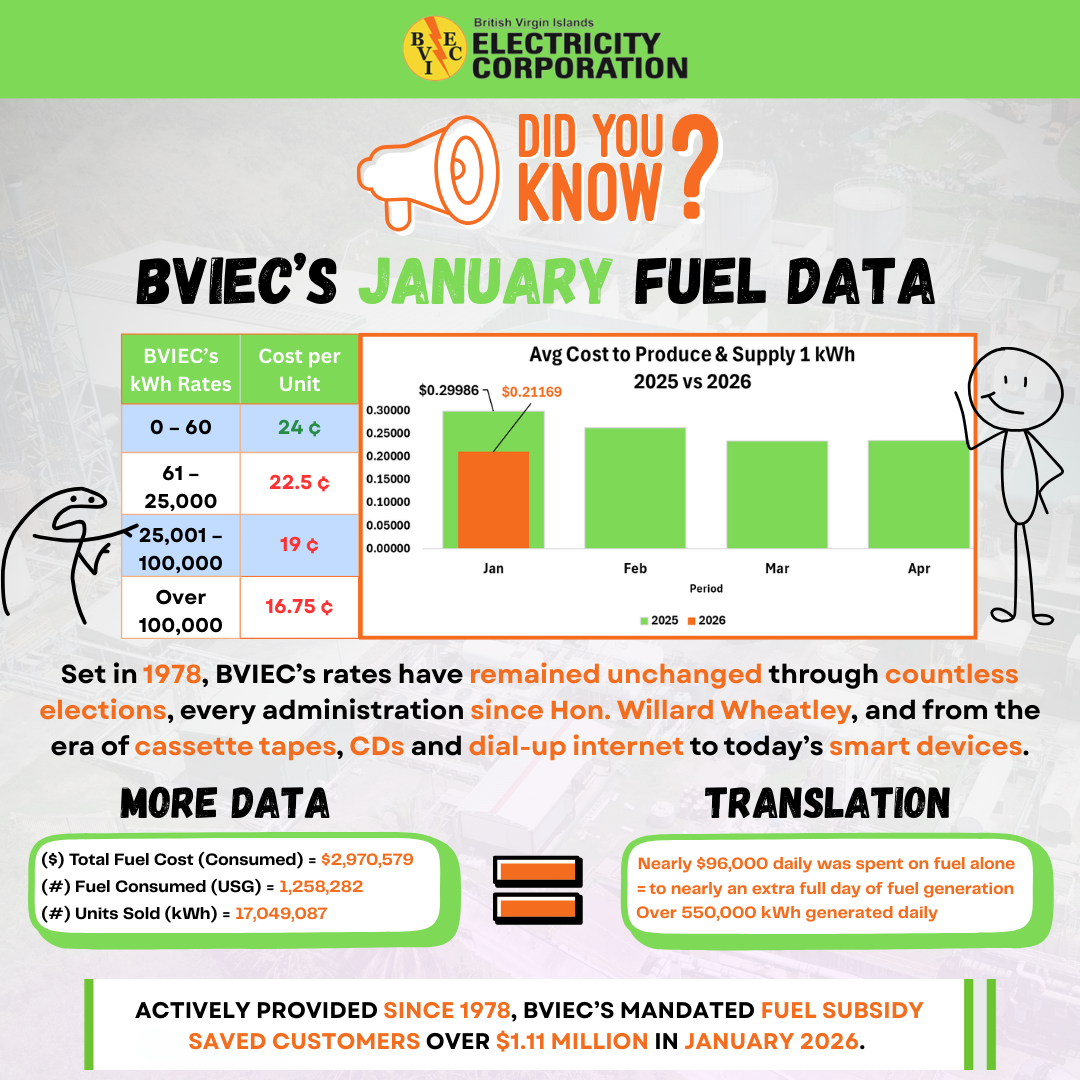
Tortola, British Virgin Islands, February 19, 2026 — January opened 2026 with slightly higher fuel prices and steady demand. While the cost to produce electricity declined compared to December, this was largely the result of necessary cost-containment measures implemented in response to ongoing financial pressures driven by essential plant remedial works and compounded by sustained inflationary pressures amid flat revenue growth.
These pressures are further compounded by the fuel subsidy that BVIEC continues to absorb on behalf of customers, meaning the lower cost was achieved mainly through tighter spending, not because fuel became cheaper or operations suddenly became more efficient.
Here’s what the numbers mean.
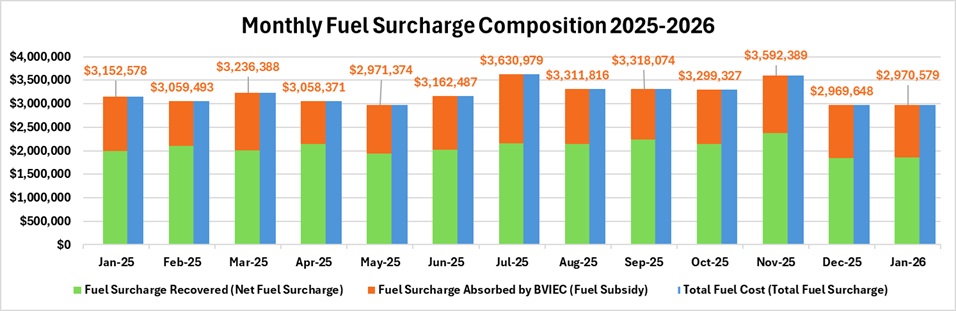
1) Total Fuel Cost: $2,970,579
(December: $2,969,648)
What it Means:
Fuel spending remained virtually unchanged from December, just under $3 million, even though fuel usage increased.
Why it Matters:
Fuel remains one of the Corporation’s largest expenses. Even when spending appears stable month-to-month, nearly $3 million is required just to power the Territory.
Relatable Example:
Nearly $96,000 was spent every single day in January on fuel alone.
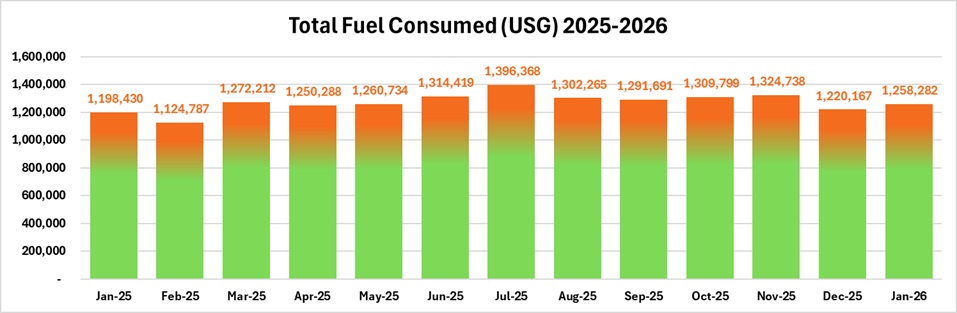
2) Total Fuel Used: 1,258,282 gallons
(December: 1,220,167 gallons)
What it Means:
Fuel consumption increased by over 38,000 gallons compared to December.
Why it Matters:
Higher electricity demand required additional fuel, even as overall fuel spending remained similar. Fuel consumption remains structurally high across the Territory.
Relatable Example:
January’s increase was equal to nearly an extra full day of fuel generation.
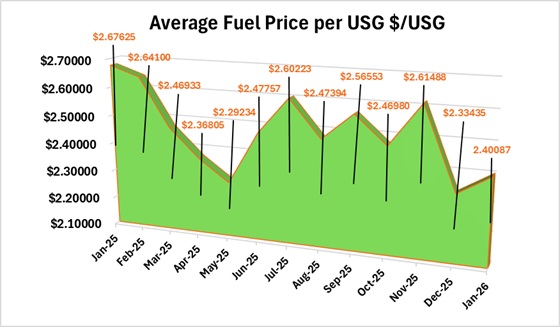
3) Average Fuel Price: $2.40087
(December: $2.33435)
What it Means:
Fuel prices rose by about 6.6 cents per gallon compared to December.
Why it Matters:
Even small increases multiply quickly when purchasing over 1.25 million gallons. While January’s price remains below early 2025 peaks, global volatility continues to influence local electricity costs.
Relatable Example:
That 6.6¢ increase equals about $83,000 more in fuel expense across all gallons purchased.
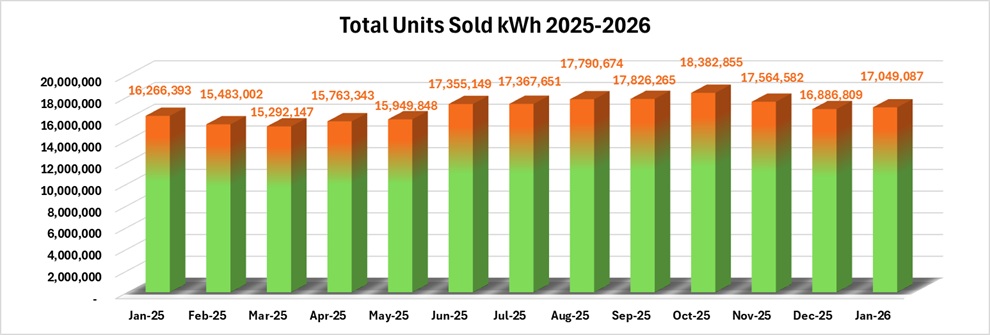
4) Total Units Sold: 17,049,087 kWh
(December: 16,886,809 kWh)
What it Means:
Electricity demand increased slightly to begin the year.
Why it Matters:
Demand remains steady and structurally high, even outside peak months. Sustained usage directly impacts fuel consumption and overall operating costs.
Relatable Example:
January delivered enough electricity to power the entire BVI customer base at near year-end levels with over 550,000 kWh generated daily.
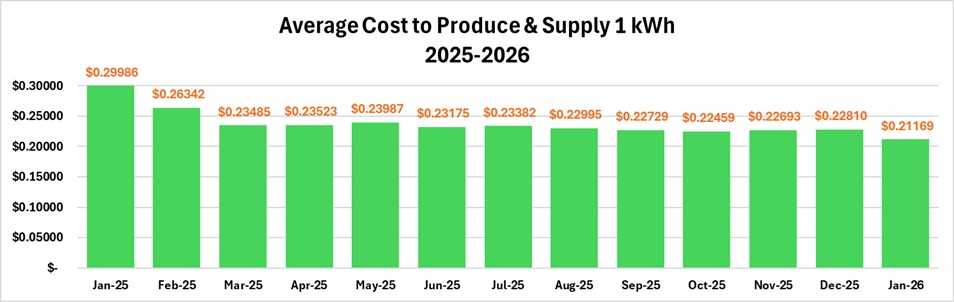
5) Cost to Produce & Supply 1 kWh: $0.21169
(December: $0.22810)
What it Means:
The cost to produce electricity dropped by 1.64 cents per kWh compared to December.
Why it Matters:
This reduction was driven largely by tightened operational spending and cost-containment measures, implemented in response to BVIEC’s ongoing financial pressures, not primarily by structural efficiency improvements. While the lower cost is positive in the short term, it reflects strategic financial restraint.
Relatable Example:
For every 1,000 kWh generated, January cost about $16 less than December, achieved through reduced operational spending.
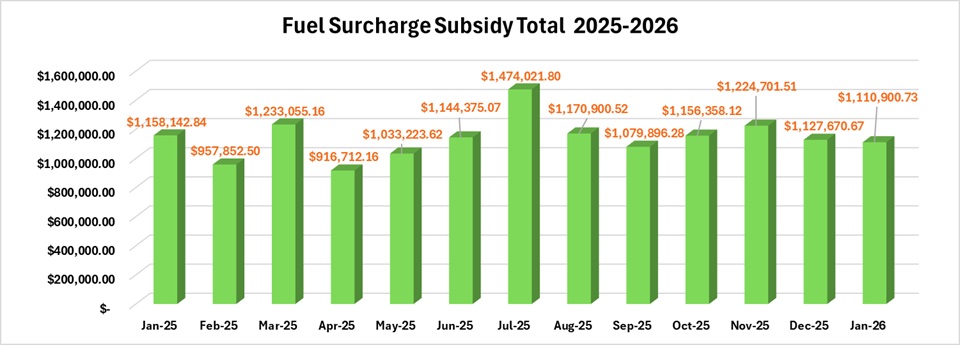
6) Fuel Surcharge Subsidy: $1,110,900.73
(December: $1,127,670.67)
What it Means:
BVIEC continued absorbing over $1.1 million in fuel costs in January alone.
Why it Matters:
Even with cost-containment measures, the fuel subsidy remains a significant monthly financial obligation. The Corporation continues balancing customer affordability with operational sustainability under fixed electricity rates.
Relatable Example:
That equals over $35,800 absorbed per day in January to support customers under fixed electricity rates.