



Pay Bill Here - Fast and Convenient
BVIEC’S MONTHLY FUEL DATA – FEBRUARY 2026
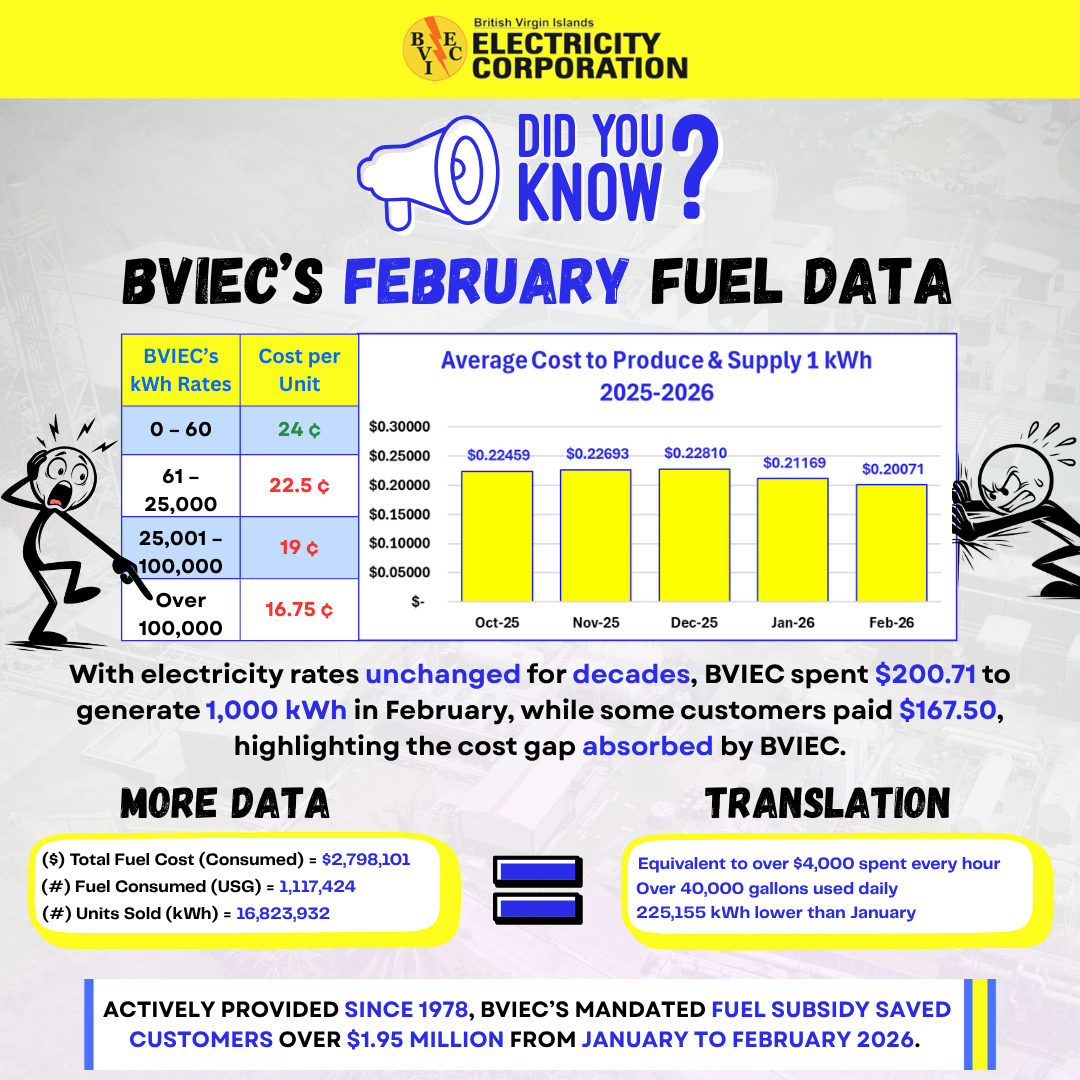
Tortola, British Virgin Islands, March 24, 2026 — February 2026 recorded a decline in electricity demand and fuel consumption compared to January, resulting in a lower average cost to produce and supply electricity. However, this reduction must be viewed within the broader operational realities facing BVIEC, as it reflects not only efficiencies, but also necessary cost-containment measures adopted to sustain operations amid mounting financial pressures.
Out of necessity, BVIEC is increasingly being forced to rely on credit from partners and the continued deferral or cancellation of essential maintenance and replacement of critical plant and equipment. While these measures help manage short-term costs, they are not sustainable and highlight the mounting strain on the Corporation’s ability to maintain long-term reliability.
These challenges are largely driven by electricity rates that have remained unchanged for decades, despite the cumulative impact of inflation, rising fuel costs, and increased operational expenses over the past four decades. Combined with BVIEC’s continued absorption of fuel subsidy costs on behalf of customers, February’s fuel data underscores the need to address the long-term impact of inflation on the Corporation’s solvency while maintaining reliable service for the Territory.
Here’s what the numbers mean.
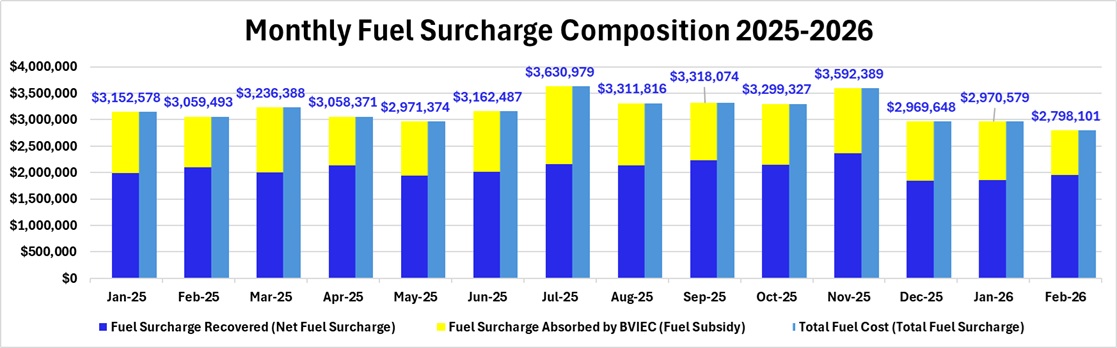
1) Total Fuel Cost: $2,798,101
(January: $2,970,579)
What it Means:
BVIEC spent approximately $2.8 million on fuel in February, which was lower than January, largely due to reduced electricity demand and lower fuel consumption.
Why it Matters:
Fuel remains the largest cost driver in electricity generation. Even small changes in fuel spending can significantly impact production costs and the fuel surcharge. Despite the reduction, BVIEC still spent nearly $100,000 per day to power the Territory.
Relatable Example:
Equivalent to over $4,000 spent every hour.
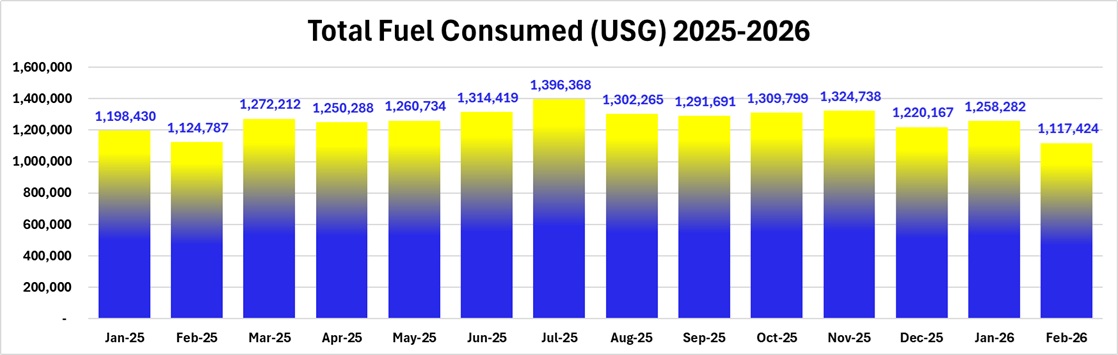
2) Total Fuel Used: 1,117,424 gallons
(January 2026: 1,258,282 gallons)
What it Means:
February required less fuel to power the Territory, reflecting slightly lower electricity demand compared to January, but it still took over one million gallons to keep the lights on across the Virgin Islands.
Why it Matters:
Even when demand drops, powering the Territory still requires massive amounts of fuel, meaning global fuel prices continue to play a major role in electricity costs.
Relatable Example:
Equivalent to over 37,000 gallons used daily.
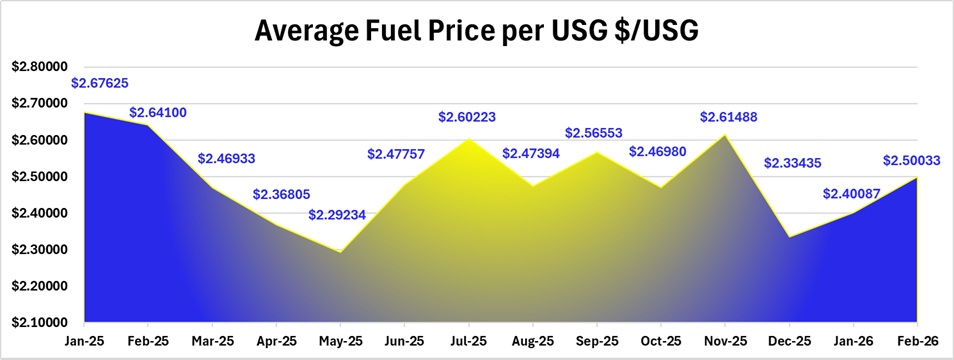
3) Average Fuel Price: $2.50033
(January: $2.40087)
What it Means:
Although BVIEC used less fuel overall, the price per gallon increased by 10 cents in February. This highlights how global fuel price volatility continues to influence electricity production costs.
Why it Matters:
This shows how global fuel prices, not just usage, influence electricity costs. Even when demand drops, higher fuel prices can still drive production costs upward.
Relatable Example:
That 10¢ increase equals about $111,000 more in fuel expense across all gallons purchased.
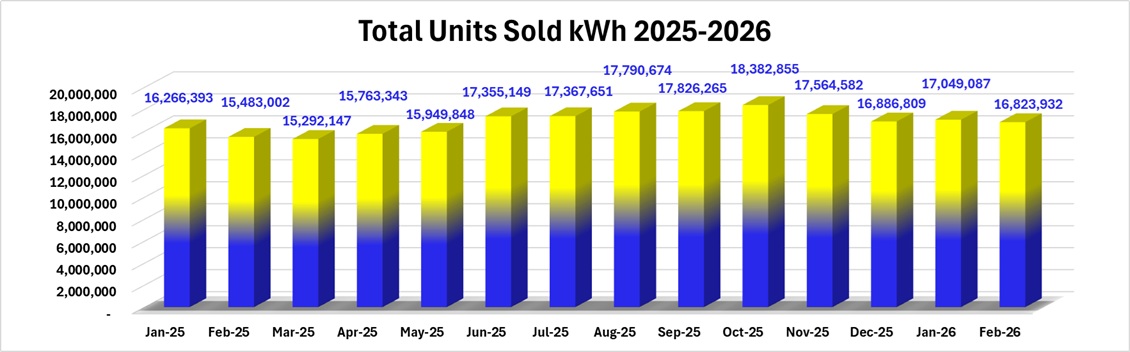
4) Total Units Sold: 16,823,932 kWh
(January: 17,049,087 kWh)
What it Means:
Electricity demand declined slightly in February, which contributed to reduced fuel consumption. This is consistent with seasonal demand trends early in the year.
Why it Matters:
Lower demand helps reduce fuel consumption, but BVIEC must still maintain full operational readiness to power the Territory at all times.
Relatable Example:
Electricity for 18,000+ customers, Territory-wide.
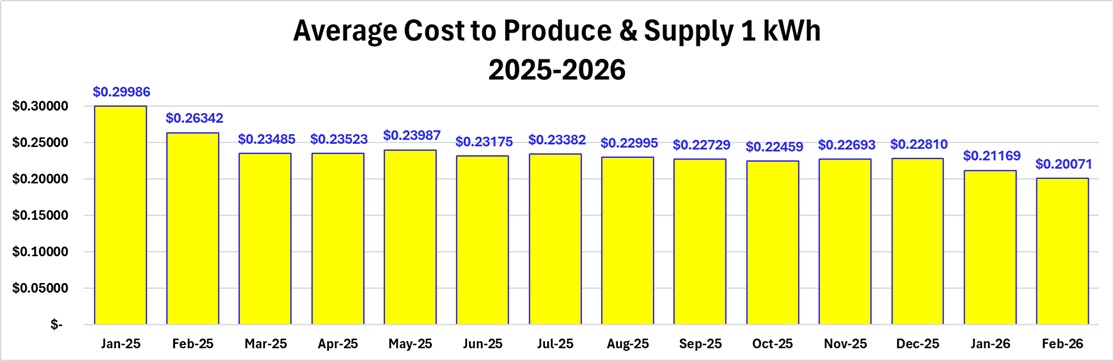
5) Cost to Produce & Supply 1 kWh: $0.20071
(January: $0.21169)
What it Means:
The cost to produce electricity declined in February, driven by lower fuel usage and continued cost-containment measures.
Why it Matters:
Even at 20 cents per kWh, BVIEC continues to operate under fixed rates established decades ago, meaning electricity is still priced below or near production cost in several rate categories. This continues to place pressure on BVIEC’s finances.
Relatable Example:
For every 1,000 kWh generated, BVIEC spent $200.71 to produce electricity, while some large customers paid $167.50 per kWh.
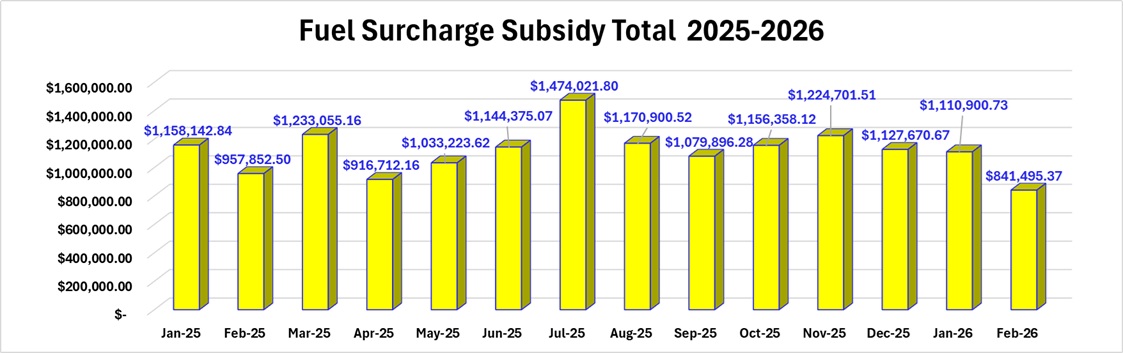
6) Fuel Surcharge Subsidy: $841,495.37
(January: $1,110,900.73) (Jan–Feb 2026 Total: $1,952,396.11)
What it Means:
BVIEC continued absorbing over $1.1 million in fuel costs in January alone.
Why it Matters:
Fuel prices move globally, but your electricity bill doesn’t always move at the same pace. That’s because BVIEC continues to absorb part of the pressure before it reaches customers. This balancing effort helps smooth sudden price swings and provides some stability during uncertain global conditions.
Relatable Example:
That equals over $1.95 million already absorbed in 2026.